English

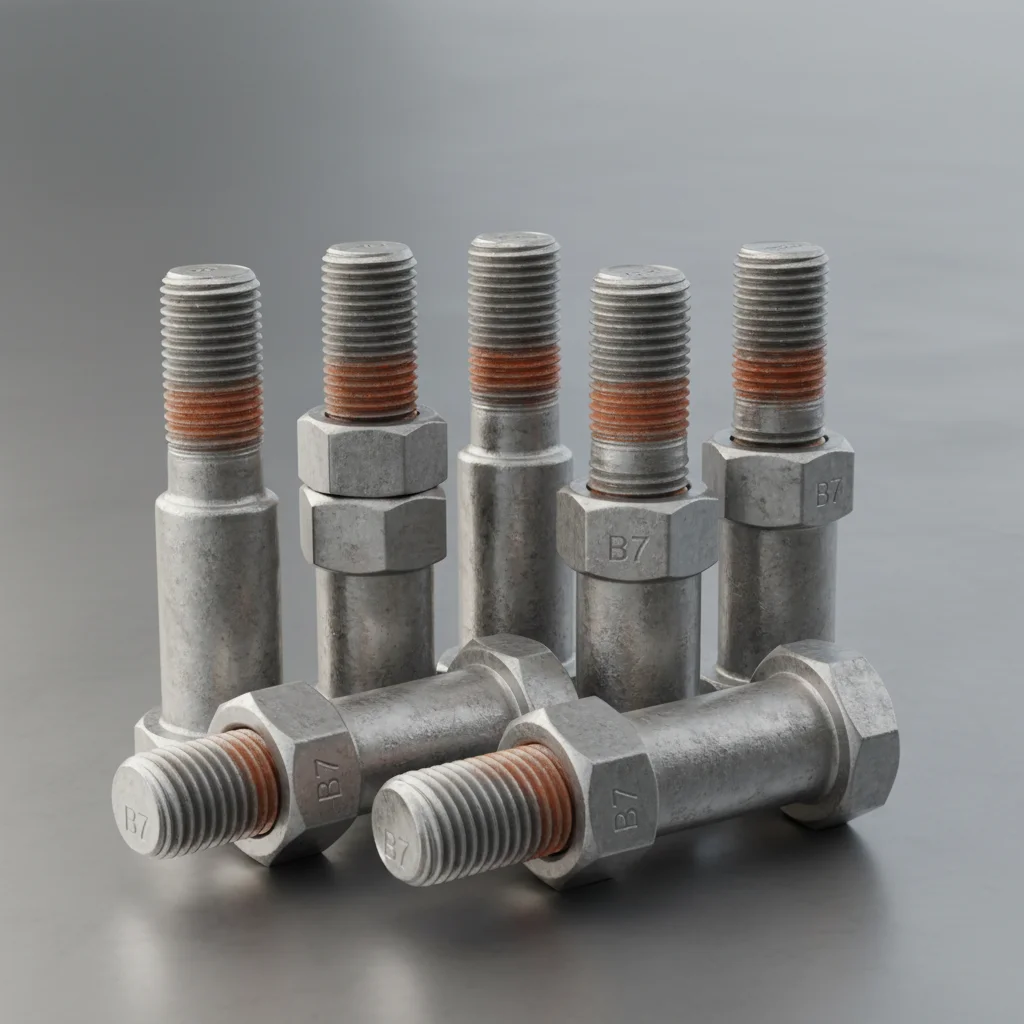
The global structural metal fabrication industry is currently witnessing a significant shift toward high-precision fastening components that can withstand extreme mechanical stress. For engineers managing heavy-duty mounting, the procurement of reliable china lag bolts and stud systems has become a critical focal point for ensuring long-term structural integrity.
The primary challenge lies in the trade-off between installation flexibility and load-bearing capacity. Traditional fixed-length fasteners often lead to significant material waste and increased labor costs during on-site adjustments, prompting a move toward fully threaded solutions that offer infinite nut positioning.
This technical analysis examines the engineering advantages of DIN 976 compliant fully threaded studs, exploring how their material composition and threading precision address the evolving requirements of industrial machinery and large-scale construction.


The operational core of a DIN 976 stud is its 100% continuous threading. Unlike standard bolts that feature a shank and a limited threaded end, these rods allow for absolute flexibility in nut positioning. This is essential for complex assemblies where the exact thickness of the joined materials may vary slightly.
From a manufacturing perspective, achieving consistent thread pitch over lengths up to 3000mm requires advanced cold-forged machinery and precise spheroidizing annealing. This ensures that the fastener maintains structural uniformity and avoids stress concentration points along its axis.
Selecting the appropriate material grade is the most critical decision in fastener engineering. Carbon steel grades, ranging from 4.8 to 12.9, provide a spectrum of tensile strengths. For instance, a grade 12.9 stud is engineered for extreme load-bearing requirements in industrial settings, offering high yield strength and hardness.
In contrast, stainless steel options like A2-70 and A4-80 are prioritized for environments where oxidation is a primary risk. These materials utilize chromium and nickel to form a passive layer, ensuring that the fastening integrity is not compromised by atmospheric corrosion over time.
The relationship between grade and application is absolute; using a low-grade fastener in a high-stress structural joint can lead to catastrophic fatigue failure. Therefore, verification through EN 10204 3.1 certification is necessary to ensure the mechanical and chemical properties meet project safety regulations.
Thread engagement refers to the length of the stud that is actually threaded into a nut or a tapped hole. Insufficient engagement leads to thread stripping, where the threads shear off under load before the bolt reaches its tensile limit.
When using stainless steel, engineers must also account for galling—a form of cold welding. This phenomenon occurs when surface oxides are disrupted, causing the metals to fuse. The application of anti-seize lubricants is the industry-standard mitigation strategy to maintain thread mobility during assembly.
Evaluating the efficiency of a fastening system involves comparing installation speed, material waste, and durability. Fully threaded studs significantly outperform fixed-length bolts in customizable environments because they can be cut to precision lengths on-site using standard tools.
This flexibility reduces the "off-cut" waste typically associated with ordering multiple fixed lengths for a single project. The following normalized assessment compares various fastener configurations across key engineering metrics.
In automotive chassis manufacturing and heavy machinery assembly, the ability to perform on-site adjustments is paramount. DIN 976 studs are frequently utilized in these sectors to allow for infinite nut positioning, which simplifies the integration of components with varying tolerances.
Furthermore, in large-scale construction projects, these fasteners are deployed in critical load-bearing connections. The use of high-tensile carbon steel (up to grade 12.9) ensures that the connections can withstand dynamic loads and vibrations without loosening, provided that the correct torque is applied.
The longevity of structural fasteners is determined by their surface finish. For outdoor construction, standard zinc plating is often insufficient. Hot-Dip Galvanized (HDG) and Dacromet finishes provide significantly thicker protective layers, preventing atmospheric corrosion from reaching the steel core.
Teflon coatings are utilized in specialized industrial environments where chemical resistance or low friction is required. This reduces the risk of seizure and protects the fastener from corrosive agents in chemical processing plants.
Selecting the right finish requires a risk analysis of the operating environment. For example, marine environments necessitate the use of A4-80 stainless steel or high-grade Dacromet to avoid salt-spray degradation, ensuring the safety of the structural assembly over a multi-decade lifecycle.
Designing a fastening strategy requires an integrated approach. Engineers must evaluate the required load capacity, the environmental corrosivity, and the installation constraints. A systemic failure often occurs not because of the fastener itself, but because of a mismatch between the material grade and the application environment.
The following matrix provides a framework for selecting the optimal configuration based on the specific engineering profile. This ensures that the balance between cost and performance is optimized without compromising safety.
By adhering to global standards such as DIN 976, procurement teams can ensure dimensional accuracy and full interchangeability with standard nuts, reducing supply chain risks and lead times.
| Configuration Type | Material Specification | Surface Finish | Recommended Use Case |
|---|---|---|---|
| Basic Configuration | Carbon Steel 4.8 | Zinc Plated | Light Indoor Mounting |
| Standard Configuration | Carbon Steel 8.8 | YZP / Black | General Machinery |
| High-Duty Configuration | Carbon Steel 12.9 | HDG / Dacromet | Heavy Structural Load |
| Precision Configuration | Stainless A2-70 | Natural | Food/Medical Equipment |
| Corrosion-Resistant | Stainless A4-80 | Natural | Marine/Chemical Plant |
| Specialized Profile | Custom Alloy | Teflon | High-Friction/Chemical |
Unlike standard bolts that possess a head and a limited threaded section, DIN 976 studs are fully threaded rods. This design allows for infinite nut positioning on both ends of the fastener, providing far greater flexibility for structural supports, complex machinery assembly, and scenarios where the exact grip length cannot be predetermined during the design phase.
For outdoor environments, the choice depends on the level of exposure. Stainless steel (A4-80) is ideal for maximum corrosion resistance. For carbon steel applications, we recommend Hot-Dip Galvanized (HDG) or Dacromet finishes. These coatings provide a robust physical barrier against moisture and oxygen, significantly extending the service life of the structural joint compared to standard zinc plating.
Yes, one of the primary advantages of fully threaded studs is that they can be cut to any required length using a hacksaw or angle grinder. This eliminates the need to order dozens of different fixed lengths. However, it is technically recommended to deburr the cut ends to ensure a smooth installation and prevent damage to the nuts during threading.
Traceability is ensured through material certifications, most notably EN 10204 3.1. This document provides the chemical analysis and mechanical test results for the specific batch of steel used. For critical projects, this certification proves that the fasteners meet the required tensile strength, yield point, and hardness specifications demanded by engineering codes.
For critical load-bearing applications, the general engineering rule is a minimum thread engagement of 1.5 times the nominal diameter of the stud. For example, an M20 stud should have at least 30mm of engagement. This ensures that the joint fails in tension (the bolt breaks) rather than in shear (the threads strip), which is a safer failure mode in structural engineering.
Galling is common in stainless steel due to the disruption of the chromium oxide layer. To prevent this "cold welding," it is strongly recommended to apply a high-quality anti-seize lubricant to the threads during assembly. This creates a barrier between the mating surfaces, reducing friction and ensuring that the nuts can be tightened and removed without seizing.
The transition toward high-performance, fully threaded fastening systems represents a broader trend in structural metal fabrication toward flexibility and risk mitigation. By utilizing DIN 976 standards and appropriate material grades, engineers can significantly reduce installation waste and ensure that critical joints remain secure under extreme loads.
Ultimately, the selection of china lag bolts and stud bolts should be driven by a comprehensive analysis of the operating environment and mechanical requirements. Investing in certified, high-tensile components is not merely a procurement choice, but a fundamental safety requirement for modern industrial infrastructure.



Hit enter to search or ESC to close
If you are interested in our products, you can choose to leave your information here, and we will be in touch with you shortly.