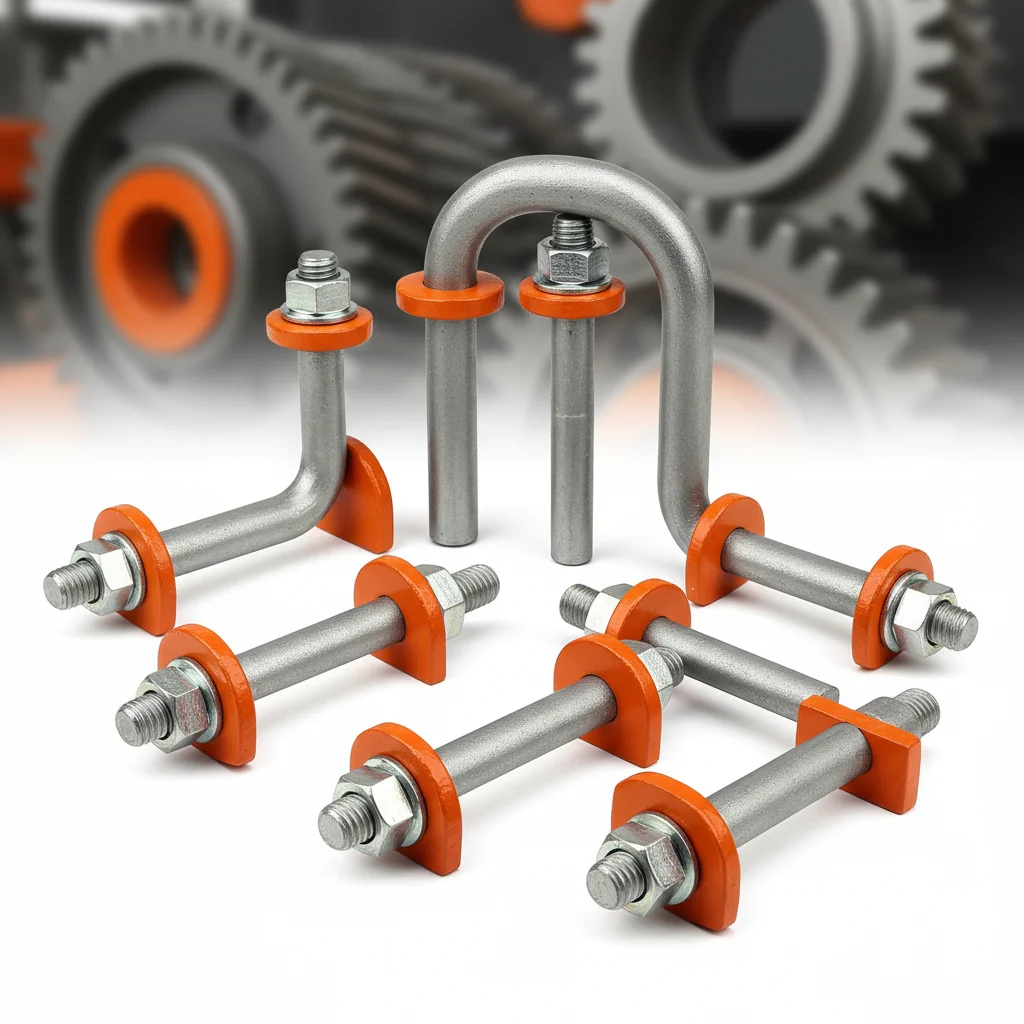

Selecting the correct fastening solution is often the difference between a structure that lasts decades and one that fails prematurely under stress. In the realm of heavy-duty assembly, the hex head cap screw remains the industry standard for high-torque applications where security and shear strength are non-negotiable.
Unlike standard bolts, these screws are engineered for precise fitting and high clamping force, making them essential for the structural metal fabrication industry. Whether integrated into automotive chassis or massive industrial frameworks, the integrity of the joint depends entirely on the material grade and the precision of the threading.
This guide examines the technical nuances of these fasteners, focusing on how material selection and surface treatments impact long-term reliability in harsh environments, helping procurement managers and engineers optimize their hardware specifications.

Defining the Mechanical Role of Hex Head Cap Screws

At its core, a hex head cap screw is a high-strength threaded fastener designed to be driven by a hexagonal wrench or socket, providing a significant mechanical advantage during installation. Unlike simple bolts, these are typically manufactured to strict tolerances to ensure they can be used in tapped holes, creating a rigid, permanent connection between two metal components.
In structural metal fabrication, the primary function is to maintain a specific clamping load that prevents joint separation under vibrational or tensile stress. The hexagonal head allows for the application of high torque, which is critical when working with high-grade carbon steels or stainless alloys required for load-bearing structures.
Understanding the distinction between a cap screw and a standard bolt is vital for safety; the former is designed for higher precision and often higher strength levels, ensuring that the fastener does not yield before the joint is fully secured.
Core Engineering Characteristics and Material Advantages
The performance of a fastener is dictated by its metallurgy and the precision of its cold-forging process. Most industrial-grade screws utilize high-carbon steel or stainless steel to balance ductility with tensile strength, ensuring the fastener can withstand immense pressure without snapping.
Material choice directly influences the screw's resistance to fatigue. For instance, alloys treated via spheroidizing annealing—a process utilized by professional manufacturers like Haosheng Fastener—enhance the material's machinability and toughness, reducing the risk of brittle fracture in cold climates.
Furthermore, the thread profile must be consistent with international standards such as DIN or ISO. Any deviation in the pitch or diameter can lead to cross-threading or insufficient engagement, which compromises the entire structural integrity of the assembly.
Critical Application Scenarios in Metal Structural Fabrication
In the automotive sector, these fasteners are indispensable for chassis and suspension systems where they must absorb constant road vibration while maintaining a tight seal. The high shear strength of a hex head cap screw ensures that critical components remain aligned even under extreme centrifugal forces.
Marine and offshore installations present a different challenge: salt-induced corrosion. In these environments, fasteners are often paired with specialized coatings, such as Dacromet, to prevent oxidation. When used in deck hardware or coastal structures, the combination of high-strength steel and advanced plating extends the service life from a few years to over a decade.
Industrial plant construction, including power generation and mining facilities, relies on these screws for heavy equipment mounting. Because these structures often face high-temperature cycles, the thermal expansion coefficients of the screw and the mating part must be carefully matched to avoid loosening over time.
Quantifying Performance: Torque and Tension Benchmarks
Measuring the efficiency of a fastening system involves analyzing the relationship between the applied torque and the resulting tension (clamping force). An optimized fastener minimizes "torque loss" caused by friction in the threads and under the head.
When comparing standard zinc-plated fasteners to those with advanced coatings like Dacromet, the friction coefficient is more stable, allowing for more predictable tensioning. This consistency is critical for automated assembly lines where precision is measured in Newton-meters.
hex head cap screw Performance Metrics
As illustrated in the data, the use of high-precision cap screws significantly improves the Load Distribution Efficiency and Corrosion Resistance benchmarks compared to generic industry standards. This ensures that the joint remains secure even when subjected to 500+ hours of salt spray testing.
Strategic Procurement and Quality Verification Practices
For procurement professionals, the risk of "counterfeit" or sub-standard fasteners is a significant liability. Verification must go beyond the visual inspection of the head markings; it requires a deep dive into material certifications and batch testing results.
Key verification steps include requesting Mill Test Reports (MTRs) and verifying ISO9001 or ISO14001 certifications. For high-strength applications, testing for hydrogen embrittlement—especially after plating—is a critical safety requirement to prevent sudden, catastrophic failure.
Sourcing directly from manufacturers with integrated heat treatment and cold-forging capabilities reduces the risk of intermediary quality drift and ensures a more stable supply chain for large-scale structural projects.
Evolution of Surface Coatings for Corrosion Control
Traditional zinc plating is often insufficient for modern industrial demands. The industry is shifting toward complex coatings like Dacromet and Geomet, which provide a physical and chemical barrier against oxygen and moisture.
These advanced coatings offer salt spray protection exceeding 1,000 hours, which is significantly higher than standard galvanization. Moreover, because these processes are often heavy-metal-free, they align with stricter environmental regulations in the EU and North America.
The trade-off is usually cost, but the Return on Investment (ROI) is realized through reduced maintenance cycles and the elimination of frequent fastener replacements in corrosive outdoor infrastructure like wind turbines or solar mounts.
Comparative Analysis for Fastener Selection Decision
Choosing the right fastener requires weighing the operational environment against the required mechanical properties. A screw that is too hard may be brittle, while one that is too soft may deform under load.
The following matrix provides a decision-making framework based on common industrial requirements and the corresponding technical specifications for structural fasteners.
| Environment | Recommended Material | Preferred Coating | Primary Risk Factor |
|---|---|---|---|
| Coastal/Marine | Stainless Steel 316 | Passivated | Pitting Corrosion |
| Automotive Chassis | Grade 8.8/10.9 Steel | Zinc Flake/Dacromet | Vibrational Loosening |
| Industrial Mining | Alloy Steel | Hot Dip Galvanized | Abrasive Wear |
| Chemical Plants | Hastelloy/Titanium | Specialized Polymer | Acidic Degradation |
| High-Temp Furnace | Nickel Alloys | Dry Film Lubricant | Thermal Oxidation |
| Light Infrastructure | Carbon Steel | Yellow Zinc Plated | Surface Oxidation |
Ultimately, the selection should be validated by a professional engineer. Those evaluating these technical parameters can review more detailed product specifications and company capabilities via www.yfnfasteners.com to ensure alignment with project standards.
Frequently Asked Questions
Conclusion
The hex head cap screw is more than a simple commodity; it is a critical engineering component that ensures the safety and longevity of structural metal assemblies. From the precision of cold-forging to the chemistry of corrosion-resistant coatings, every detail contributes to the overall reliability of the joint.
For organizations operating in high-stakes environments—such as marine, automotive, or heavy industrial construction—prioritizing material certification and supplier transparency is the most effective way to mitigate risk. By aligning fastener specifications with actual operational stresses, engineers can optimize both performance and lifecycle costs.