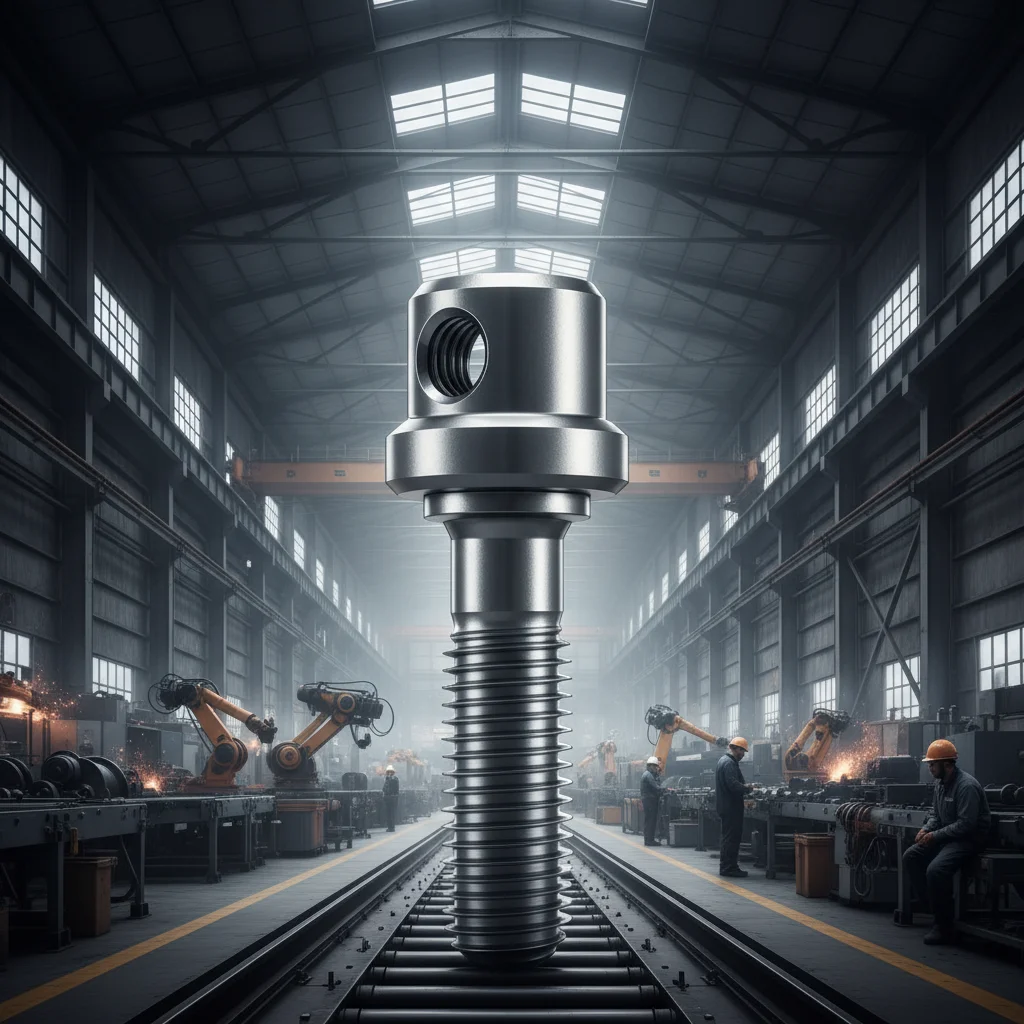
In the realm of structural steel fabrication, the integrity of a connection often depends on the smallest components. The a325 bolt represents a critical standard in high-strength structural bolting, designed to ensure that massive steel frames can withstand immense tension and shear forces without failure. Understanding the nuances of these fasteners is essential for engineers and contractors aiming to meet rigorous safety codes in modern infrastructure.
Globally, the demand for reliable fastening solutions has surged alongside the rise of mega-structures and complex industrial plants. Whether it is a skyscraper in New York or a bridge in Shanghai, the ability to create a rigid, vibration-resistant joint is paramount. The a325 bolt provides the necessary clamping force to create friction-grip connections, which are far superior to standard bearing-type joints in dynamic environments.
While many focus on the bolts themselves, the complete assembly—including the use of a high-quality a325 bolt and matching locking nuts—is what truly guarantees structural longevity. By integrating precision-engineered components like DIN 935 castle nuts, industry professionals can eliminate the risk of loosening under extreme stress, ensuring that the structural skeleton remains intact for decades.

Global Industry Context of a325 bolt
The global construction landscape is currently defined by a push toward taller buildings and longer spans, necessitating fasteners that can handle extreme loads. The a325 bolt has become a cornerstone of this movement, adhering to strict ASTM standards that ensure consistency across international borders. This standardization allows for seamless collaboration between architects in one country and manufacturers in another.
However, the industry faces a recurring challenge: the degradation of joints due to environmental corrosion and cyclic loading. Without the correct grade of high-strength bolts, structural fatigue can lead to catastrophic failures. This is why the precise metallurgy and heat treatment of an a325 bolt are scrutinized by quality control teams worldwide to ensure safety and compliance.
Defining the a325 bolt Standard
In simple terms, an a325 bolt is a heavy hex structural bolt made from medium carbon steel, quenched and tempered to achieve high tensile strength. Unlike standard hardware store bolts, these are engineered specifically for structural steel connections. They provide a predictable amount of tension when tightened, which is critical for calculating the load-bearing capacity of a building.
Beyond the raw strength, the a325 bolt is designed to work in tandem with specific nuts and washers. For instance, when paired with a DIN 935 slotted nut, the assembly transforms from a simple tension joint into a positive mechanical lock. This synergy is what allows these fasteners to be used in high-vibration environments like industrial rotating machinery.
From a humanitarian and safety perspective, the adoption of these standards reduces the risk of collapse in disaster-prone areas. By ensuring that every structural joint is secured with a verified high-strength bolt, engineers can build resilience into the very fabric of urban infrastructure, protecting thousands of lives.
Core Components and Technical Factors
The performance of an a325 bolt is determined by several critical factors, primarily its material composition and strength level. Using carbon steel or stainless steel ensures a balance between ductility and hardness, allowing the bolt to absorb energy without snapping instantly under sudden overload.
Durability is further enhanced through surface finishes. An a325 bolt may be treated with Hot-Dip Galvanizing (HDG) or Dacromet to prevent oxidation. In coastal regions or chemical plants, these coatings are not optional; they are essential to prevent the "rust-jacking" that can compromise structural integrity.
Another key factor is the precision of the threading. Whether using coarse or fine threads, the tolerance must be exact to allow for proper torque application. When an a325 bolt is tightened to its specific tension, it creates a clamped joint that relies on friction between the steel plates, effectively preventing any slippage.
Global Applications and Use Cases
The versatility of the a325 bolt makes it indispensable across various heavy-duty sectors. In the automotive and transportation industry, these fasteners are found in steering linkages and suspension components where safety is non-negotiable. In agricultural machinery, they secure pivot points that endure constant mud, moisture, and heavy torque.
In the marine and offshore sector, these bolts are used in rudder assemblies and deck hardware. Here, the combination of high tensile strength and corrosion-resistant coatings allows the a325 bolt to survive the harsh saline environments of the open ocean while maintaining a secure grip on critical equipment.
Comparative Performance of High-Strength Fastening Methods
Long-Term Value and Reliability
Investing in a certified a325 bolt provides more than just immediate structural stability; it offers long-term peace of mind. The logical benefit is a reduction in maintenance costs, as these fasteners are less likely to fail or loosen over time. This reliability is particularly critical in public infrastructure, where the cost of repair often far exceeds the initial cost of premium materials.
From an emotional angle, the use of high-standard fasteners represents a commitment to safety and dignity for the end-users of a structure. Whether it is a worker in a factory or a commuter on a bridge, the invisible presence of a correctly installed a325 bolt ensures a secure environment, fostering trust in the engineering that surrounds us.
Future Trends in High-Strength Fastening
The future of structural fastening is moving toward "smart" components. We are seeing the integration of tension-sensing technology into the a325 bolt, allowing engineers to monitor the health of a joint in real-time via digital sensors. This shift toward predictive maintenance will allow for the identification of loosening before it becomes a safety risk.
Sustainability is also driving innovation. New, eco-friendly coatings are replacing traditional chrome-based platings for the a325 bolt, reducing the environmental impact of the manufacturing process without sacrificing corrosion resistance. These "green" fasteners are becoming a requirement for LEED-certified building projects worldwide.
Furthermore, automation in the assembly process is increasing. Robotic tightening systems are being calibrated to the exact specifications of the a325 bolt, eliminating human error and ensuring that every single joint in a massive structure is tightened to the precise required tension.
Overcoming Implementation Challenges
One of the most common challenges in the field is "over-torquing," where an a325 bolt is tightened beyond its elastic limit, leading to permanent deformation or sudden failure. To solve this, experts recommend using the "Turn-of-Nut" method or calibrated tension-control bolts, which provide a visual or mechanical signal when the correct tension is reached.
Another issue is the improper pairing of components. Using a standard nut with an a325 bolt can lead to thread stripping. The solution lies in a full-system approach—matching the bolt with high-strength nuts (like DIN 935) and appropriate washers to distribute the load evenly and prevent the fastener from pulling through the steel plate.
Finally, corrosion in hidden joints remains a threat. The solution is the implementation of rigorous inspection schedules using ultrasonic testing, which can verify the integrity of an a325 bolt without having to disassemble the connection, ensuring the structure remains safe throughout its operational life.
Technical Analysis of a325 bolt Performance across Different Environments
| Environment Type | Recommended a325 bolt Finish | Corrosion Resistance (1-10) | Maintenance Interval |
|---|
| Indoor Industrial | Black Oxide | 4 | 5 Years |
| Outdoor Urban | Zinc Plated | 6 | 3 Years |
| Coastal Marine | Hot-Dip Galvanized | 9 | 2 Years |
| Chemical Plant | Stainless Steel | 10 | 1 Year |
| Heavy Machinery | Dacromet | 8 | 3 Years |
| Agricultural | Zinc Plated | 5 | 2 Years |
FAQS
The primary difference lies in the intended application and testing standards. An a325 bolt is specifically engineered for structural steel applications and is tested for tension and shear strengths that meet ASTM standards, whereas grade 5 bolts are general-purpose fasteners. The a325 bolt is designed to create a friction-grip connection, providing significantly higher stability in structural frames.
No, you should never use a standard nut. To maintain the integrity of the joint, an a325 bolt must be paired with a nut of equivalent or higher strength. For applications requiring vibration resistance, we recommend using a DIN 935 castle nut with a cotter pin to physically prevent the nut from rotating, ensuring the bolt remains at the required tension.
For marine environments, the most effective solution is using Hot-Dip Galvanized (HDG) or Stainless Steel versions of the a325 bolt. HDG provides a thick protective layer of zinc that acts as a sacrificial anode, protecting the steel core from saltwater corrosion, while stainless steel offers inherent resistance to oxidation.
The most reliable method is the "Turn-of-Nut" method, where the bolt is brought to a snug-tight condition and then turned a specific additional fraction of a turn based on the bolt length. Alternatively, using calibrated torque wrenches or tension-control bolts ensures that the clamping force is consistent across all connections.
Generally, once an a325 bolt has been tightened to its ultimate tension, it may have undergone slight plastic deformation. For critical structural joints, it is safer to replace the bolt to ensure the new connection achieves the same precise clamping force without the risk of material fatigue.
Haosheng Fastener brings 30 years of industry experience and ISO certifications to every product. We provide a complete system solution, supplying not just the a325 bolt, but the matching castle nuts and cotter pins. With a massive inventory of 2000 tons of spot goods and a commitment to strict QC, we ensure your project stays on schedule and meets all safety codes.
Conclusion
The a325 bolt is more than just a piece of hardware; it is a critical safety component that enables the creation of the modern built environment. From its high tensile strength and precise metallurgy to the specialized coatings that fight corrosion, every aspect of its design is geared toward structural reliability. By pairing these bolts with advanced locking mechanisms like DIN 935 castle nuts, engineers can build structures that are not only strong but virtually immune to the failures caused by vibration and stress.
As we move toward a future of smarter, greener construction, the evolution of high-strength fastening will continue to play a pivotal role. We encourage project managers and engineers to prioritize certified, high-quality fasteners to ensure the longevity and safety of their infrastructure. For a comprehensive range of high-strength solutions and expert technical support, visit our website: www.yfnfasteners.com.