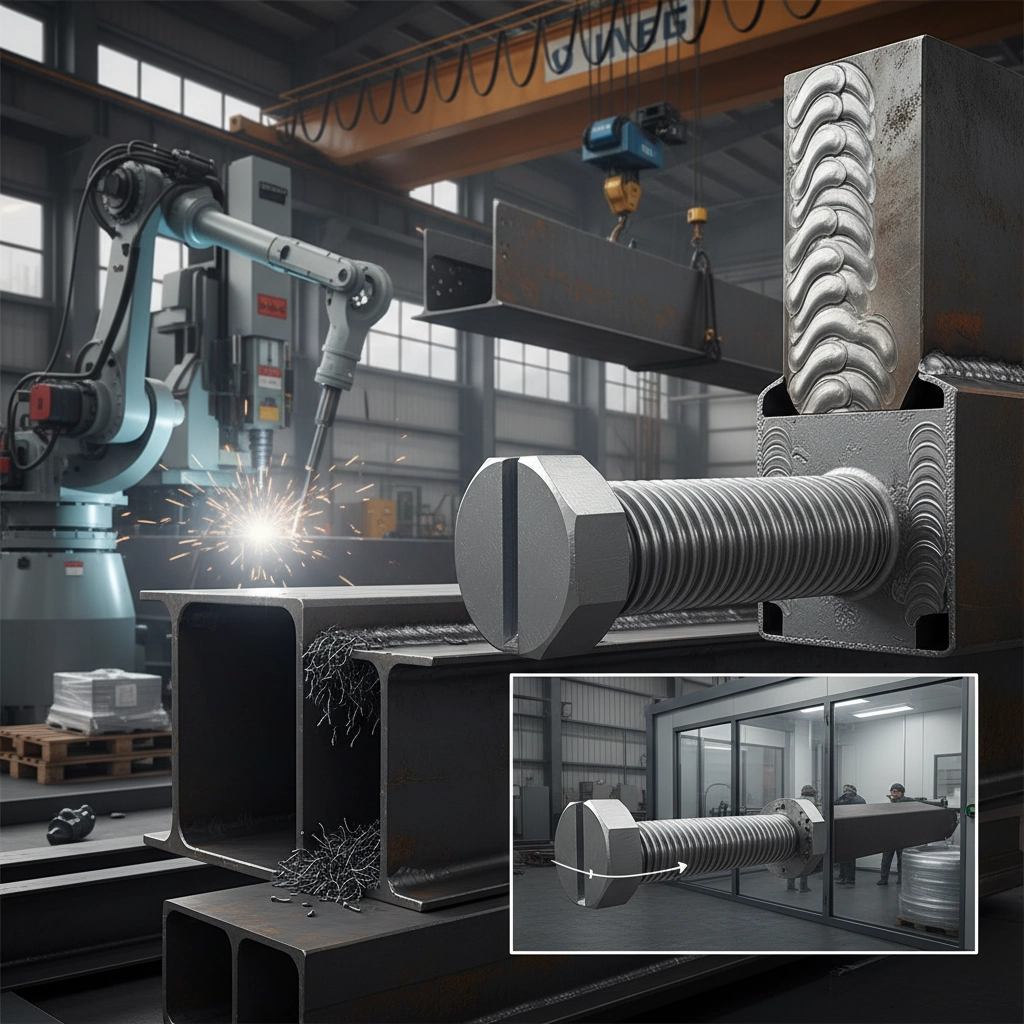
In the demanding world of structural metal fabrication, the integrity of a connection often depends on the smallest components. While many focus on the beams and plates, the precision of the fastening system is what ensures long-term stability and safety. Understanding the synergy between high-strength bolts and their corresponding nuts is essential for any engineer aiming for zero-failure assemblies.
Across global industries, from automotive assembly lines to massive infrastructure projects, the demand for standardized, high-performance fasteners has never been higher. The ability to maintain precise torque and clamp load is not just a technical requirement but a safety mandate. This is where the rigorous standards of ISO 4032 come into play, providing a universal blueprint for reliability.
When sourcing critical components, many professionals look for an allen screw or a high-grade hexagon nut to ensure a seamless fit. By integrating components that meet strict mechanical properties, manufacturers can reduce assembly time and eliminate the risk of rounding or stripping during installation.

The Global Impact of Standardized Fastening
The global movement toward ISO standardization has transformed the way structural metal products are manufactured and assembled. By adhering to strict guidelines like ISO 4032, the industry ensures that a nut produced in one part of the world fits perfectly with a bolt produced in another, drastically reducing procurement errors and downtime in international projects.
This universality is critical for the scalability of modern infrastructure. When engineers specify components that align with global standards, they are not just buying hardware; they are ensuring that the project remains maintainable for decades, regardless of where replacement parts are sourced.
Defining Precision in ISO 4032 Components
ISO 4032 refers to a specific standard for hexagon nuts, defining the exact geometry and mechanical properties required for high-performance fastening. These components are designed to provide a secure lock on metric threads, ensuring that the clamp load is distributed evenly across the contact surface to prevent joint failure.
Unlike generic fasteners, ISO 4032 nuts are manufactured to precise tolerances in width across flats (s) and thickness (m). This precision allows for the use of standardized wrenches and sockets, which is essential for achieving the exact torque specifications required in heavy-duty structural applications.
Whether the application requires carbon steel for raw strength or stainless steel for corrosion resistance, the focus remains on the intersection of geometry and metallurgy. This ensures that the nut doesn't just fit the bolt, but performs as a cohesive unit under extreme stress.
Core Mechanical Factors for Durability
The durability of a fastening system often depends on the property class of the materials used. For instance, matching a Class 10 nut with a Class 10.9 bolt is a fundamental rule of engineering to ensure that the nut does not strip before the bolt reaches its yield point.
When integrating an allen screw or similar precision fastener, the surface finish becomes a primary defense against environmental degradation. Options such as Hot Dip Galvanizing (HDG) or Dacromet provide critical barriers against oxidation in humid or saline environments.
Furthermore, the mechanical properties defined by ISO 898-2 ensure that every batch of nuts meets specific hardness and tensile strength requirements. This predictability allows engineers to calculate safety margins with confidence, reducing the need for over-engineering and wasting material.
Comparative Performance Analysis
Evaluating the effectiveness of different fastening methods requires a look at torque efficiency and load-bearing capacity. Standard hexagon profiles offer the most reliable contact area for manual and automated tooling, reducing the risk of rounding corners during high-torque applications.
By analyzing different grade levels and materials, we can see a clear correlation between material choice and longevity in the field. High-grade carbon steels offer unmatched strength for structural frames, while A4-80 stainless steels are superior for chemical processing plants.
Fastening Component Performance Metrics
Real-World Industrial Applications
In the automotive sector, these fasteners are used in everything from chassis assembly to engine mounts, where vibration resistance is paramount. The precise fit of an ISO 4032 nut ensures that vibrations do not lead to loosening, which would otherwise compromise the safety of the vehicle.
In heavy infrastructure and construction, these components secure structural steel beams and scaffolding. Using high-strength grades in these environments allows for leaner designs without sacrificing the structural integrity of the building or bridge.
Long-Term Value and Sustainability
The long-term value of choosing high-quality, standardized fasteners lies in the reduction of Maintenance, Repair, and Operations (MRO) costs. When components are installed correctly and built to last, the frequency of inspections and replacements drops significantly, leading to lower lifecycle costs.
From a sustainability perspective, using the correct grade prevents premature failure and waste. A fastener that lasts the entire life of a machine is far more eco-friendly than a cheaper alternative that must be replaced every few years, reducing the overall carbon footprint of the project.
Furthermore, the ability to use standard tools for maintenance means that specialized equipment is not required, simplifying the supply chain and reducing the energy spent on logistics and specialized service calls.
Future Innovations in Metal Fastening
The future of fastening is moving toward "smart" components and advanced coatings. We are seeing the emergence of materials that can signal when a bolt has lost its tension, potentially integrating sensors into the nut or bolt head to allow for real-time monitoring of structural health.
Digital transformation is also hitting the factory floor. With AI-driven quality control, manufacturers can now detect microscopic flaws in the thread of an allen screw or nut before it ever leaves the warehouse, ensuring a 100% success rate in the field.
Additionally, the shift toward green energy is driving demand for fasteners that can withstand the extreme environments of wind turbines and hydrogen plants, leading to the development of new, ultra-corrosion-resistant alloys.
Analysis of Fastener Material and Grade Suitability
| Material Type |
Typical Grade |
Corrosion Resistance |
Primary Use Case |
| Carbon Steel |
Class 8.8 / 10.9 |
Medium (with ZP) |
Structural Frames |
| Stainless Steel A2 |
A2-70 |
High |
Food Processing |
| Stainless Steel A4 |
A4-80 |
Very High |
Marine Environments |
| Alloy Steel |
Class 12.9 |
Low (needs coating) |
Engine Components |
| Galvanized Steel |
Class 8.8 |
High (HDG) |
Outdoor Infrastructure |
| Dacromet Steel |
Class 10.9 |
Excellent |
Automotive Chassis |
FAQS
ISO 4032 nuts are manufactured to a strict international standard that defines precise dimensions and mechanical properties. Unlike generic nuts, they ensure total interchangeability globally and provide guaranteed strength levels (like Class 8 or 10), making them safer for structural engineering.
The general rule is to match the property class of the nut to that of the bolt. For example, if you are using a Class 10.9 bolt, you should use a Class 10 nut. This prevents the nut's threads from stripping before the bolt reaches its intended clamp load.
Hot Dip Galvanizing (HDG) is typically the best for heavy outdoor use due to its thick protective layer. For automotive or precision machinery where tighter tolerances are needed, Dacromet or Zinc Plating is preferred for its balance of protection and precision.
It is generally discouraged due to galvanic corrosion. When two dissimilar metals touch in a moist environment, the less noble metal corrodes faster. It is best to use the same material for both the bolt and the nut to ensure joint longevity.
Over-torquing can lead to several failures: the threads may strip (especially in lower-grade nuts), the bolt may stretch beyond its elastic limit (yielding), or the head of the bolt may snap. Always refer to a torque table based on the specific property class.
Request a 3.1 Material Certificate according to EN 10204. This document provides the chemical analysis and mechanical test results for the specific batch of fasteners you received, ensuring they meet ISO standards.
Conclusion
In summary, the reliability of structural metal products is fundamentally tied to the precision of their fasteners. From the strict dimensional requirements of ISO 4032 to the critical importance of matching property classes and surface finishes, every detail plays a role in preventing catastrophic failure. By prioritizing standardized, high-quality components, manufacturers can achieve a perfect balance of strength, durability, and cost-efficiency.
Looking ahead, the industry will continue to evolve toward smarter, more sustainable fastening solutions. Whether you are designing for the automotive, construction, or energy sectors, investing in certified, traceable hardware is the only way to future-proof your assemblies. For those seeking professional-grade fasteners that meet these rigorous global standards, we invite you to explore our full range. Visit our website: www.yfnfasteners.com