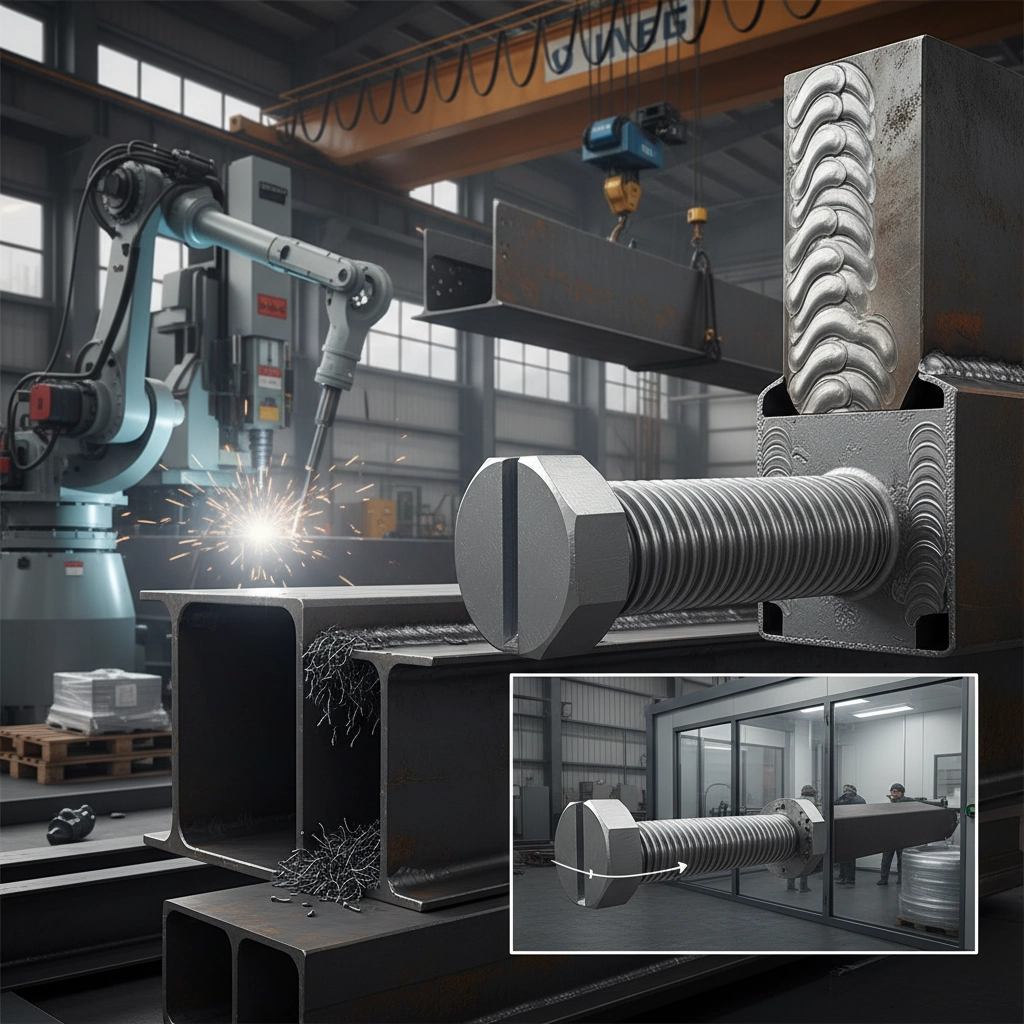

Selecting reliable fasteners manufacturers is often the most overlooked critical path in structural engineering and heavy machinery assembly. When a single bolt failure can compromise an entire infrastructure project, the procurement logic shifts from mere cost-per-unit to a rigorous evaluation of metallurgical integrity and dimensional precision.
The global industrial landscape currently demands fasteners that can withstand extreme stress, corrosive environments, and precise torque requirements. Whether it is for suspended ceilings in commercial construction or chassis repairs in the automotive sector, the quality of the fastener determines the lifecycle and safety of the entire assembly.
This guide examines the technical benchmarks, material certifications, and procurement strategies essential for sourcing high-strength fasteners, focusing on how DIN standards and professional manufacturing capabilities mitigate operational risks.

Evaluating Technical Competencies in Fastener Production

Professional fastener manufacturing is far more than simple threading; it is a complex orchestration of cold-forging, heat treatment, and surface chemistry. A manufacturer's capability is defined by their equipment—such as advanced spheroidizing annealing machines—which ensures that the metal maintains its ductility while achieving the required hardness.
For procurement officers, the "source factory" advantage is paramount. Direct sourcing eliminates intermediaries, ensuring that material certifications (such as EN 10204 3.1) are passed directly from the furnace to the end-user without documentation gaps. This traceability is non-negotiable for aerospace, automotive, and structural steel projects.
Scale also plays a role in consistency. Facilities covering significant areas with monthly outputs in the thousands of tons typically possess the stability in their heat treatment cycles necessary to guarantee that a Grade 8.8 bolt possesses the same yield strength regardless of the production batch.
The Critical Role of DIN 976 Compliance and Material Grade
Dimensional accuracy is the bedrock of fastener interchangeability. The DIN 976 standard for thread studs ensures that a bolt manufactured in one part of the world fits perfectly with a nut from another, preventing thread galling and ensuring uniform load distribution across the joint.
Beyond dimensions, the material grade—ranging from carbon steel 4.8 to the ultra-high-strength 12.9—determines the application boundary. While a 4.8 grade is suitable for light DIY fabrication, structural supports in industrial conveyor systems require 8.8 or 10.9 grades to prevent catastrophic shear failure under dynamic loads.
Corrosion resistance further complicates the selection. Zinc plating (ZP) offers basic protection, but for harsh environments, Hot-Dip Galvanized (HDG) or Dacromet finishes are essential to prevent oxidation from compromising the structural integrity of the thread over time.
Industrial Application Scenarios for High-Strength Stud Bolts
In construction, full-threaded rods are indispensable for suspended ceilings and pipe hangers. The ability to cut these rods to length on-site while maintaining 100% thread engagement allows for infinite nut positioning, which is critical for aligning HVAC and electrical conduits in complex ceiling grids.
Within the automotive and machinery sectors, stud bolts serve as the primary mounting points for engine components and chassis assemblies. The use of stainless steel (A2-70/A4-80) in these environments prevents galvanic corrosion when fasteners are in contact with dissimilar metals, extending the service life of the vehicle.
Industrial maintenance often requires custom-length fasteners for thread repairs or temporary bracing. The capability of a manufacturer to provide "cut-to-length" services ensures that site engineers receive ready-to-install components, significantly reducing installation time and labor costs on the factory floor.
Comparative Analysis of Fastener Strength and Durability
When comparing standard fasteners against high-precision engineered components, the difference lies in the consistency of the tensile strength and the precision of the thread pitch. Standard commercial bolts often exhibit variance in their heat treatment, leading to premature failure at the thread root.
The following data illustrates the performance gap in terms of load-bearing consistency and corrosion resistance when using DIN-compliant high-strength fasteners compared to generic industrial alternatives.
fasteners manufacturers Performance Metrics
As indicated, the adherence to strict DIN standards and the use of high-grade materials like 10.9 carbon steel significantly enhance the reliability of the assembly, particularly in high-vibration environments where fatigue strength is the primary failure mode.
Strategic Procurement Guidelines for Industrial Fasteners
The procurement of fasteners should move away from a "lowest bid" mentality toward a "total cost of ownership" (TCO) model. The cost of replacing a failed bolt in a commissioned bridge or an operational assembly line far outweighs the initial savings of purchasing non-certified hardware.
Key evaluation metrics for suppliers should include their ISO certifications (9001, 14001, 45001) and their ability to provide free samples for independent lab testing. A manufacturer willing to submit their products to third-party verification demonstrates confidence in their production process.
Additionally, consider the logistics of "spot goods." Having a partner with a substantial inventory of hot-selling products (e.g., 2000+ tons) ensures that project timelines are not derailed by supply chain fluctuations or raw material shortages.
Future Trends in Fastener Metallurgy and Automation
The industry is shifting toward "smart fasteners" and advanced coatings. We are likely to see an increase in the adoption of nano-coatings that provide superior corrosion resistance compared to traditional galvanization, potentially reducing the weight of the fasteners while increasing their lifespan in marine environments.
Automation in cold-forging is expected to further tighten dimensional tolerances. The integration of AI-driven quality control, where every single bolt is scanned for thread defects in real-time, could eliminate the need for traditional batch sampling, ensuring 100% defect-free shipments.
Furthermore, the demand for sustainable manufacturing is driving the use of recycled high-strength alloys. This trend depends on the ability of manufacturers to maintain the same mechanical properties while utilizing secondary raw materials, presenting a new challenge for metallurgy experts.
Fastener Selection Matrix for Engineering Decision Making
Selecting the correct fastener requires a balance between mechanical requirements and environmental constraints. The following matrix provides a framework for engineers to match material grades and finishes to specific operational conditions.
By aligning the fastener's properties with the actual stress and environmental factors of the application, engineers can optimize both safety and cost.
| Application Environment | Recommended Material | Surface Finish | Key Performance Driver |
|---|---|---|---|
| Indoor Structural Support | Carbon Steel 8.8 | Zinc Plated | Tensile Strength |
| Marine/Coastal Infrastructure | Stainless A4-80 | Plain/Passivated | Pitting Resistance |
| Heavy Industrial Machinery | Carbon Steel 10.9 | Black Oxide | Fatigue Resistance |
| Automotive Chassis | Carbon Steel 12.9 | Dacromet | Shear Strength |
| HVAC Suspended Systems | Carbon Steel 4.8 | Hot-Dip Galv. | Corrosion Life |
| Chemical Processing Plant | Stainless A2-70 | Teflon Coated | Chemical Inertness |
For those requiring specific customizations or technical data sheets, reviewing the comprehensive product range available through www.yfnfasteners.com can provide the necessary specifications for tailored engineering projects.
Frequently Asked Questions
Conclusion
The integrity of any structural assembly depends entirely on the smallest components. By prioritizing DIN compliance, material traceability, and the technical capabilities of the manufacturer, engineers can effectively mitigate the risk of mechanical failure and extend the lifecycle of their projects.
For those evaluating high-performance fastening solutions, the combination of a direct source factory and rigorous adherence to international standards remains the most reliable procurement strategy. Detailed technical specifications and product availability can be further explored at www.yfnfasteners.com.