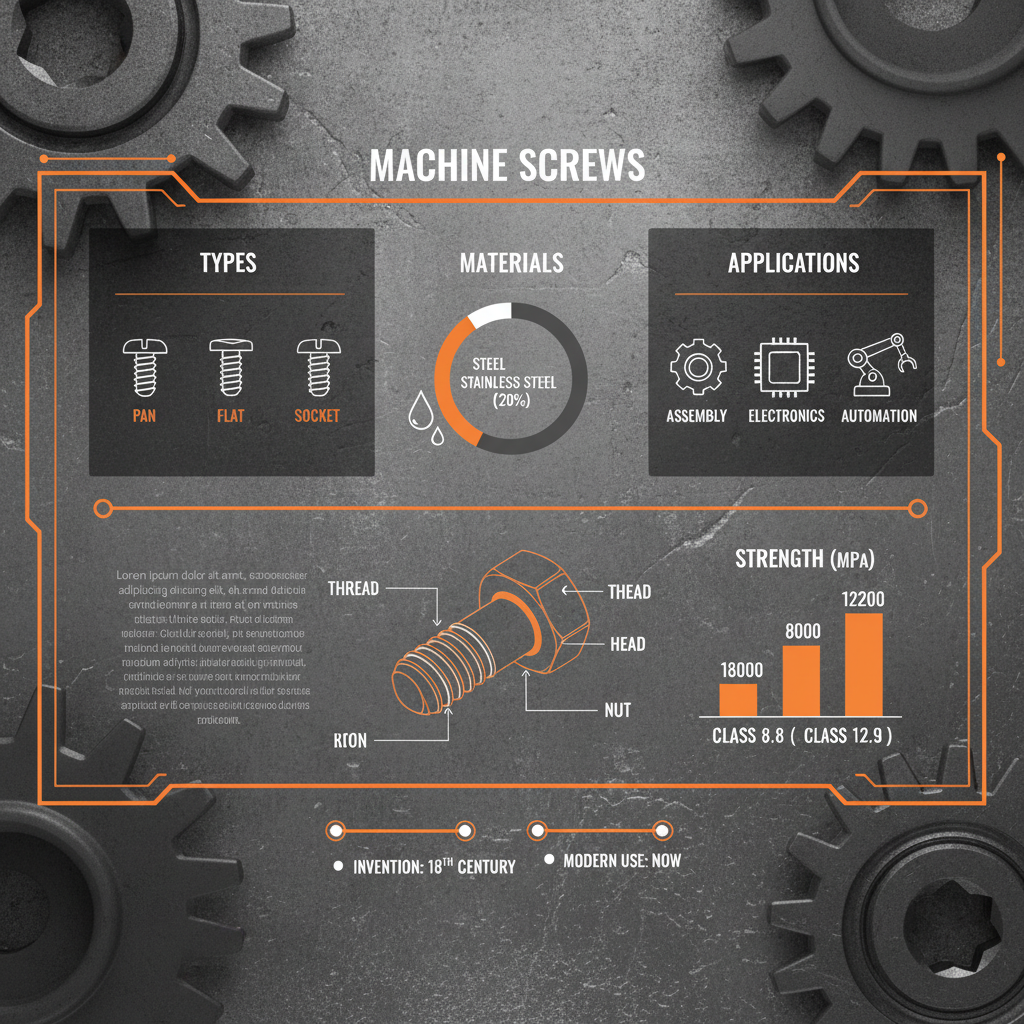
In the intricate world of structural metal fabrication, the smallest components often bear the heaviest responsibility. machine screws serve as the fundamental bonding agents that ensure the integrity of everything from delicate electronics to massive industrial frameworks. Understanding the nuances of these fasteners is not just a technical requirement but a critical safety measure for global manufacturing.
The global demand for precision fastening has surged as industries move toward modular construction and high-efficiency automation. By leveraging advanced metallurgy and standardized threading, machine screws provide a reliable, removable, and scalable solution for joining metal parts without the need for permanent welding. This flexibility is what allows modern machinery to be serviced, upgraded, and recycled efficiently.
Whether you are managing a large-scale production line or sourcing materials for a specialized engineering project, selecting the right fastener can mean the difference between long-term stability and catastrophic failure. This guide explores the technical depths, global applications, and future innovations of machine screws to help you make informed procurement and design decisions.
Understanding the Fundamentals of Machine Screws
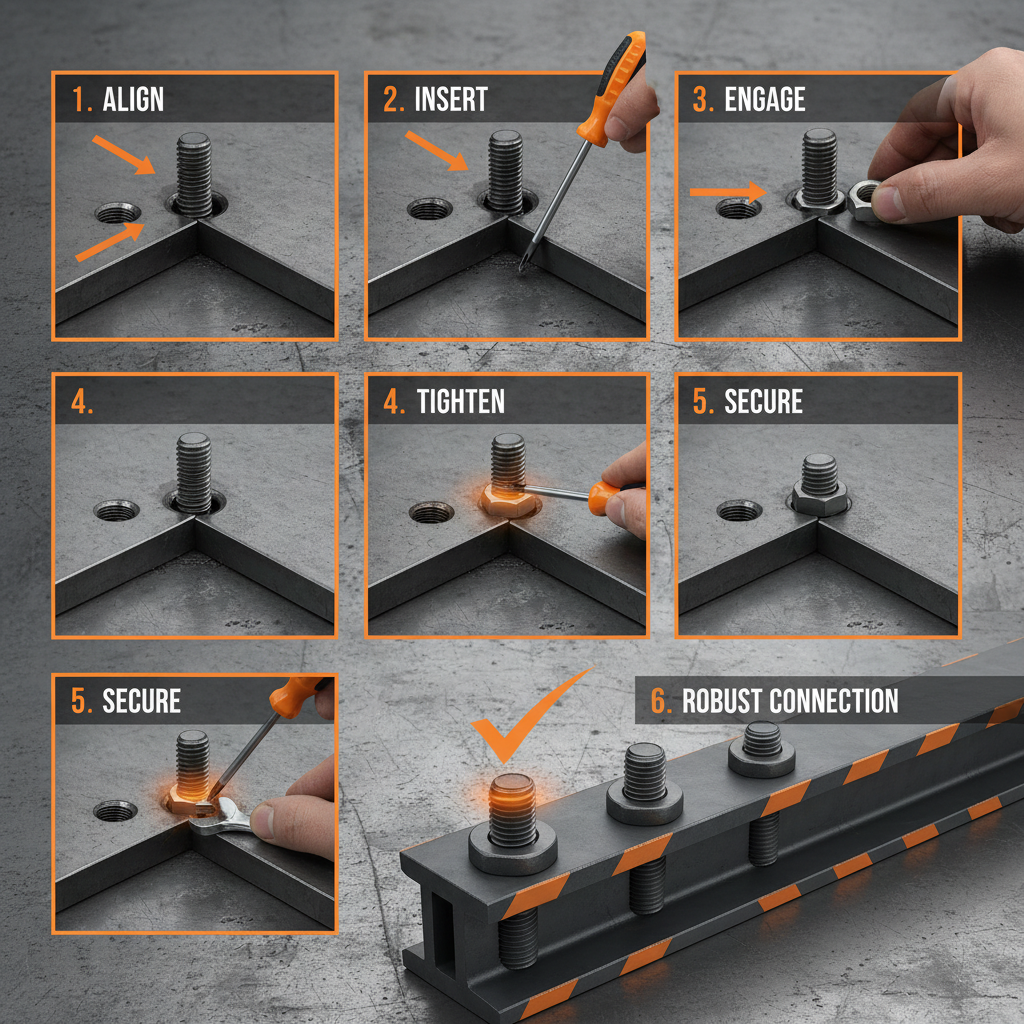
At its simplest level, machine screws are threaded fasteners designed to be used in conjunction with a nut or a pre-tapped hole. Unlike wood screws or self-tapping screws, they do not create their own threads in the mating material; instead, they rely on a precise match between the screw's external threads and the internal threads of the receiving part. This characteristic allows for a high degree of clamping force and the ability to disassemble components without damaging the base material.
In the context of structural metal manufacturing, these fasteners are indispensable. Their design ensures that vibrations in heavy machinery do not loosen the connection, provided the correct grade and torque are applied. By utilizing a combination of head styles (such as pan, flat, or hex) and drive types (such as Phillips, Torx, or Slotted), engineers can optimize the assembly process for both speed and security.
Global Industry Context and Standardization
The global fastener market is governed by rigorous international standards, primarily ISO (International Organization for Standardization) and ASME (American Society of Mechanical Engineers). These standards ensure that machine screws produced in one part of the world are compatible with components manufactured elsewhere. Without this interoperability, the global supply chain for automotive, aerospace, and construction industries would collapse into a chaotic mess of proprietary measurements.
Statistically, the demand for high-strength fasteners has grown in tandem with the rise of "Industry 4.0." As automation increases, the precision required for machine screws has shifted from millimeter tolerances to micron levels. This evolution is driven by the need for lighter, stronger structures in electric vehicles and renewable energy infrastructure, where every gram of weight saved improves overall system efficiency.
However, the industry faces a significant challenge: the proliferation of sub-standard fasteners in the global market. Low-quality screws often fail to meet tensile strength requirements, leading to structural failures in critical infrastructure. This has led to a renewed focus on E-E-A-T (Experience, Expertise, Authoritativeness, and Trustworthiness) in sourcing, where buyers prioritize certified manufacturers who provide full material traceability and laboratory test reports.
Core Components for Maximum Durability
To ensure the longevity of any assembly, one must look beyond the basic shape of machine screws and analyze their core components. The thread pitch, for instance, determines the resistance to loosening; a finer pitch generally offers better vibration resistance, which is essential in high-frequency industrial environments.
Material composition is the most critical factor for durability. Whether using stainless steel for corrosion resistance in marine environments or alloy steel for high-tensile strength in structural beams, the choice of machine screws must align with the environmental stressors the product will face, including temperature fluctuations and chemical exposure.
Furthermore, surface treatments—such as zinc plating, galvanization, or black oxide—provide an additional layer of protection. These coatings prevent oxidation and reduce friction during installation, ensuring that machine screws maintain their structural integrity over decades of service, reducing maintenance costs and increasing safety.
Performance Metrics Across Material Grades
Selecting the appropriate grade for machine screws is a balance between cost, weight, and mechanical requirements. For instance, Grade 8 steel provides immense tensile strength for heavy-duty machinery but is susceptible to rust if not coated, whereas 316 Stainless Steel is the gold standard for saltwater applications despite a lower shear strength compared to high-carbon alloys.
Engineers typically use a performance matrix to decide which fastener fits the application. Factors such as yield strength, hardness, and ductility are measured to predict how the screw will behave under extreme load. By comparing different types of machine screws, companies can avoid over-engineering (which wastes money) or under-engineering (which risks failure).
Material Grade Comparison for Machine Screws
Global Applications and Use Cases
The versatility of machine screws makes them ubiquitous across diverse sectors. In the automotive industry, they are used in everything from dashboard assemblies to engine mounts, where they must withstand constant thermal cycling and vibration. In the aerospace sector, specialized titanium machine screws are employed to reduce aircraft weight while maintaining the extreme safety tolerances required for flight.
Beyond high-tech industries, these fasteners are vital in remote industrial zones and disaster relief operations. For example, in the rapid deployment of modular housing or temporary medical clinics in post-disaster zones, machine screws allow for the quick assembly and subsequent disassembly of structures, ensuring that resources can be relocated as needs change without destroying the materials.
Long-Term Value and Economic Advantages
Investing in high-quality machine screws provides significant long-term economic value by reducing the "Total Cost of Ownership." While cheaper alternatives may lower initial procurement costs, they often lead to higher expenditures in the form of frequent replacements, unplanned downtime, and potential liability costs associated with structural failure.
From a sustainability perspective, the use of standard machine screws supports a circular economy. Because they allow for non-destructive disassembly, products can be easily repaired or upgraded rather than being discarded. This reduces industrial waste and aligns with global green energy policies that encourage the longevity of manufactured goods.
Ultimately, the value of a fastener is measured in trust. For a manufacturer, knowing that every single one of the thousands of machine screws used in a product is consistent in quality provides the peace of mind necessary to scale production and enter competitive international markets.
Future Trends in Fastening Innovation
The future of machine screws is being shaped by the intersection of materials science and digital manufacturing. We are seeing the rise of "smart fasteners" equipped with sensors that can monitor tension and alert maintenance crews when a screw has loosened—a game-changer for bridge safety and aircraft maintenance.
Furthermore, additive manufacturing (3D printing) is allowing for the creation of custom-geometry machine screws that can optimize weight distribution in ways traditional machining cannot. This is particularly relevant for the satellite and space exploration industries, where every milligram of weight translates to significant launch costs.
Sustainability is also driving the development of bio-based coatings and recyclable alloy blends. The industry is moving toward a "zero-waste" manufacturing process where the scrap metal from the heading process of machine screws is immediately recaptured and reused, lowering the carbon footprint of the entire supply chain.
Comparative Analysis of Fastening Innovation Trends
| Technology Trend |
Primary Benefit |
Industry Impact |
Adoption Rate (1-10) |
| Smart Sensors |
Real-time tension monitoring |
Aerospace & Infrastructure |
4 |
| 3D Printed Alloys |
Complex weight optimization |
Medical Implants & Space |
6 |
| Eco-friendly Coatings |
Reduced toxic emissions |
Consumer Electronics |
8 |
| Nano-Surface Treatment |
Extreme corrosion resistance |
Marine Engineering |
5 |
| Automated Sorting AI |
Zero-defect quality control |
Mass Manufacturing |
9 |
| High-Entropy Alloys |
Superior thermal stability |
Nuclear Power Plants |
3 |
FAQS
Unlike wood screws, which have a pointed tip and coarse threads to grip organic fibers, machine screws have a flat tip and finer, uniform threads. They are specifically designed to be used with a nut or a pre-tapped hole in metal or plastic, ensuring a much stronger and more precise mechanical bond that is easily reversible.
Selection depends on three factors: load, environment, and budget. For high-stress structural loads, Grade 8 or Class 12.9 alloy steel is recommended. For environments exposed to moisture or chemicals, 304 or 316 Stainless Steel is best. For general-purpose light assembly, carbon steel with zinc plating offers a cost-effective balance of strength and basic corrosion resistance.
Yes, but they require a pre-threaded hole or a threaded insert (such as a Helicoil). Because plastic is softer than metal, using machine screws without an insert can lead to stripped threads. Using an insert allows the screw to bond with metal, providing the same durability in plastic as it would in a metal assembly.
The primary cause is vibration, which can overcome the friction between the threads. To prevent this, engineers use locking mechanisms such as nylon-insert lock nuts, spring washers, or thread-locking adhesives (like Loctite). Selecting a machine screw with a finer thread pitch can also help increase resistance to vibration-induced loosening.
Not necessarily. While they may look similar, ISO (metric) and ASME (imperial/inch) screws have different thread pitches and diameters. Attempting to force a metric screw into an imperial hole can strip the threads and compromise the structural integrity of the part. Always verify the standard of your mating component before sourcing fasteners.
Galvanic corrosion occurs when two dissimilar metals (e.g., stainless steel and aluminum) touch in the presence of an electrolyte. To prevent this, use fasteners made of the same material as the workpiece, or apply a non-conductive coating or washer between the machine screws and the base metal to break the electrical circuit.
Conclusion
In summary, machine screws are far more than simple commodities; they are precision-engineered components that underpin the safety and efficiency of global manufacturing. From the rigorous demands of aerospace engineering to the flexible needs of modular construction, the correct selection of material, grade, and coating is paramount. By adhering to international standards and embracing innovations in smart fastening and sustainable materials, industries can ensure long-term reliability and economic viability.
As we move toward a future of increased automation and environmental consciousness, the role of high-quality fasteners will only grow in significance. We encourage engineers and procurement specialists to prioritize material traceability and technical expertise when sourcing their components to avoid the hidden costs of failure. For those seeking the highest standards in precision fastening solutions, we invite you to explore our comprehensive range. Visit our website: www.yfnfasteners.com