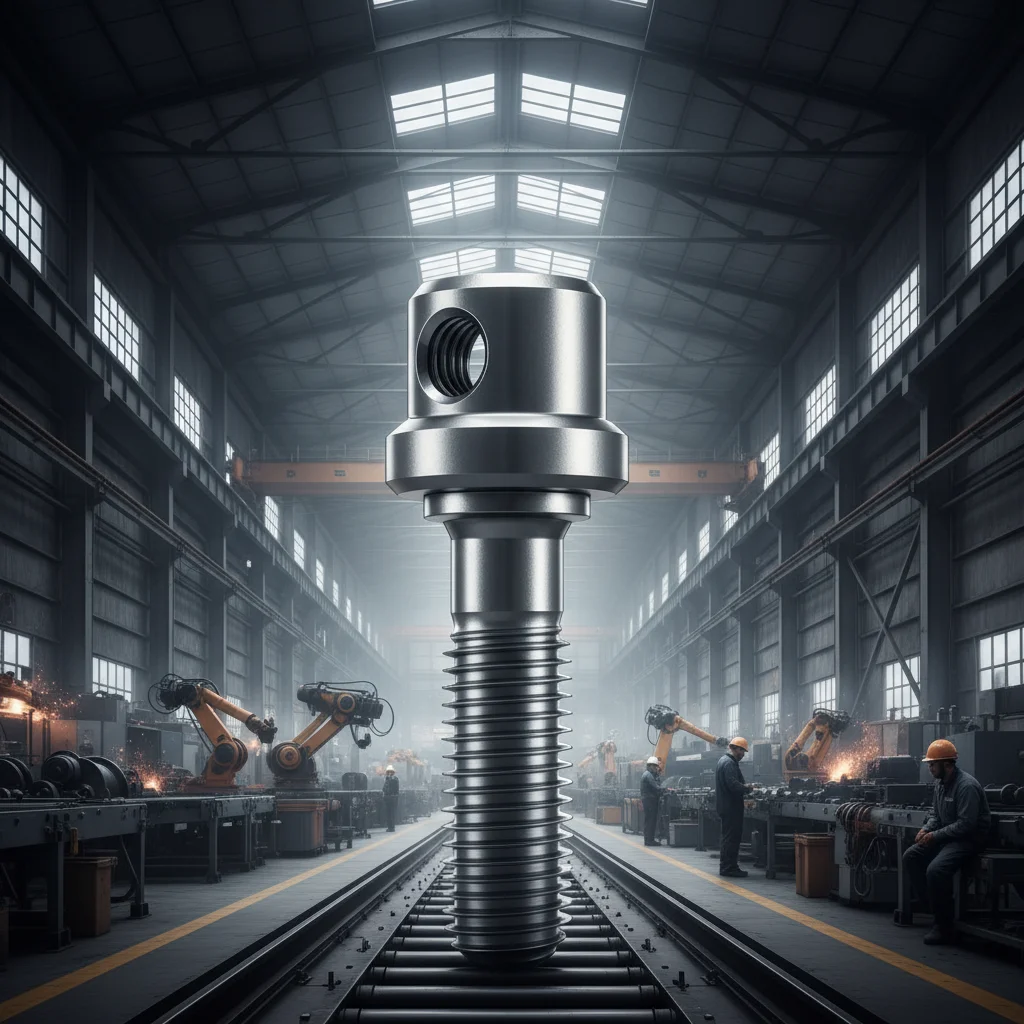
The structural integrity of modern machinery depends heavily on the precision of its fastening components, where the hex flange bolt stands out as a critical element for high-load applications. By integrating a built-in washer-like flange, these fasteners eliminate the need for separate washers, streamlining assembly processes while significantly increasing the load-bearing surface area. This design is essential for preventing material deformation and ensuring that clamping force is distributed evenly across the joint.
Across global manufacturing sectors, from automotive assembly to heavy structural steelwork, the demand for standardized fastening solutions has never been higher. The adoption of DIN 6921 and ISO 1665 standards ensures that these components maintain dimensional accuracy and performance consistency, regardless of where they are produced. This standardization is vital for maintaining safety benchmarks in environments where vibrational stress and mechanical fatigue are constant challenges.
Choosing the right hex flange bolt can mean the difference between a permanent, secure connection and a costly mechanical failure. Whether utilizing galvanized steel for corrosion resistance or high-strength alloys for extreme tension, understanding the technical nuances of these fasteners allows engineers to optimize their designs for both durability and cost-efficiency.

Standard Specifications and Compliance
The reliability of a hex flange bolt is rooted in its adherence to international standards such as DIN 6921 and ISO 1665. These certifications guarantee that every bolt produced meets strict dimensional tolerances, ensuring that the head size, thread pitch, and flange diameter are consistent. This precision is paramount in automated assembly lines where any deviation can lead to equipment downtime or failed quality inspections.
Furthermore, compliance with these standards allows for global interchangeability. When a project specifies a DIN 6921 compliant fastener, engineers can be confident that the part will fit perfectly regardless of the supplier. This standardization reduces the risk of procurement errors and ensures that the mechanical properties of the bolt are verified through rigorous quality control processes.
Material Grades and Corrosion Resistance
Material selection is the most critical factor in determining the lifespan of a fastener. The hex flange bolt is available in a wide range of materials, including carbon steel for general industrial use and stainless steel for environments prone to moisture and chemical exposure. High-strength grades such as 8.8, 10.9, and 12.9 are utilized in heavy-duty machinery where the tension loads are extreme and structural failure is not an option.
To combat oxidation and environmental degradation, various surface finishes are applied. Zinc plating (ZP) and Hot-Dip Galvanizing (HDG) provide a protective barrier against rust, while Dacromet coatings offer superior salt-spray resistance for outdoor installations. These finishes ensure that the bolt maintains its structural integrity even when exposed to harsh weather conditions or corrosive industrial chemicals.
For the most demanding environments, stainless steel variants like A2-70 and A4-80 are employed. These alloys provide inherent corrosion resistance without the need for additional coatings, making them ideal for marine applications, food processing equipment, and pharmaceutical labs. The balance between material strength and chemical stability allows for a tailored approach to every fastening challenge.
Clamping Performance and Surface Design
One of the primary advantages of the hex flange bolt is its ability to distribute clamping pressure over a wider area than a standard hex bolt. The integrated flange acts as a built-in washer, which significantly reduces the risk of the bolt head sinking into the material or causing surface crushing. This is particularly beneficial when working with softer metals or composite materials.
Depending on the application, these fasteners can be manufactured with either smooth or serrated bearing surfaces. A smooth surface is ideal for protecting the finish of the assembled part, while a serrated flange provides extra "bite" into the material, acting as a locking mechanism to prevent the hex flange bolt from loosening under high-vibration conditions.
This dual-capability makes the flange design highly adaptable. In automotive engine mounts, for example, the serrated option is often preferred to handle constant oscillation, whereas in architectural metalwork, the smooth flange is used to maintain a clean aesthetic while ensuring a secure hold.
Dimensional Analysis and Size Range
The versatility of the hex flange bolt is evident in its extensive size range, spanning from M3 for precision electronics to M50 for massive industrial structures. The length options are equally varied, ranging from 15mm to 500mm, allowing for a precise fit in both shallow and deep assemblies. This breadth of availability ensures that engineers can specify the exact dimension needed to optimize joint thickness and weight.
Thread options further enhance this flexibility, with both coarse and fine threads available. Coarse threads are the standard for most applications due to their ease of assembly and resistance to cross-threading, while fine threads are selected for applications requiring higher precision and greater resistance to loosening.
Performance Rating of Hex Flange Bolt Variants
Industrial Applications and Use Cases
The practical application of the hex flange bolt is widespread across diverse sectors. In the automotive industry, they are indispensable for chassis assembly and engine components where space is limited but clamping force must be maximized. The ability to eliminate a separate washer reduces the number of parts, lowering the total bill of materials and accelerating production speed.
In the realm of heavy machinery and construction, these bolts are used to secure structural metal frames and bridge components. In remote industrial zones, such as mining sites or oil rigs, the high-corrosion-resistant versions are critical for maintaining safety in salt-heavy or chemically aggressive air, ensuring that critical joints remain tight over decades of service.
Joint Stability and Connection Integrity
Joint stability is the primary goal of any fastening system, and the hex flange bolt excels by providing a larger contact area. This expanded footprint ensures that the tension applied during tightening is spread uniformly across the mating surface, which prevents the "pull-through" effect often seen with standard bolts in thinner materials.
Moreover, the connection integrity is bolstered by the precise thread engagement allowed by ISO 1665 standards. When paired with a matching nut, the flange bolt creates a rigid assembly that resists shear forces and axial displacement. This is vital for components that are subjected to constant dynamic loading.
From a long-term maintenance perspective, the use of flange bolts simplifies inspection. Because the flange provides a clear visual indicator of seating, technicians can more easily verify that the fastener is correctly positioned and tightened to the specified torque, reducing the risk of human error during field maintenance.
Technical Parameter Comparison
Selecting the optimal hex flange bolt requires a deep dive into its technical parameters, such as the "d" (nominal diameter) and "k" (head height). These dimensions determine the tool size required for installation and the clearance needed within the assembly. For instance, Form A and Form B heads offer different maximum diameters to accommodate varying torque requirements.
The relationship between thread pitch and strength level is another key consideration. A coarse thread is generally more robust for structural applications, while a fine thread allows for a more precise adjustment of the clamping force. The strength levels, ranging from 4.8 to 12.9, dictate the maximum tensile load the bolt can withstand before permanent deformation occurs.
Ultimately, the integration of these parameters—material, size, finish, and strength—allows the hex flange bolt to be a truly customizable solution. Whether the requirement is a small M5 bolt for a consumer appliance or an M20 bolt for a power plant, the technical framework provided by DIN 6921 ensures a reliable outcome.
Comparison of Hex Flange Bolt Technical Specifications by Grade
| Strength Grade | Material Base | Primary Application | Durability Score (1-10) |
|---|
| 4.8 | Low Carbon Steel | Light Furniture/Appliances | 5 |
| 8.8 | Medium Carbon Steel | General Machinery | 7 |
| 10.9 | Alloy Steel | Automotive Chassis | 9 |
| 12.9 | High Alloy Steel | Heavy Industrial Press | 10 |
| A2-70 | Stainless Steel | Food/Medical Equipment | 8 |
| A4-80 | Acid-Resistant SS | Marine/Chemical Plants | 9 |
FAQS
The primary difference is the integrated flange under the head. A standard hex bolt requires a separate washer to distribute pressure and prevent the head from sinking into the material. A hex flange bolt combines the bolt and washer into one piece, which increases the contact area, improves load distribution, and speeds up the assembly process by reducing the number of components needed.
You should choose a serrated flange when the application involves high levels of vibration or dynamic loading. The serrations "bite" into the mating surface, creating a mechanical lock that helps prevent the bolt from rotating or loosening over time. Smooth flanges are preferred when you need to avoid damaging the surface coating or the material of the part being fastened.
In most practical industrial applications, yes. Both DIN 6921 and ISO 1665 define the specifications for hexagon flange head screws. While there may be minute differences in the historical drafting of the standards, they are designed to be functionally equivalent in terms of dimensions and performance for the vast majority of mechanical assemblies.
For marine environments, A4-80 stainless steel is the gold standard. Unlike A2 stainless steel, A4 contains molybdenum, which provides significantly better resistance to chlorides and salt-water corrosion. If stainless steel is not an option, Hot-Dip Galvanizing (HDG) is a strong alternative, although it offers a thicker, less precise finish than stainless steel.
The choice depends on the maximum tensile load the bolt will face. Grade 8.8 is suitable for general structural use. Grade 10.9 is used for high-stress automotive and industrial parts. Grade 12.9 is reserved for the most extreme loads. Always refer to the engineering load calculations to ensure the bolt's yield strength exceeds the maximum expected tension with a safe margin of error.
Yes, as long as the nut matches the nominal diameter (e.g., M10) and the thread pitch (coarse or fine) of the bolt. However, for maximum joint stability, it is often recommended to use a matching high-strength nut or a locking nut to complement the performance characteristics of the flange bolt.
Conclusion
The hex flange bolt represents a sophisticated evolution of the traditional fastener, offering a unique combination of load distribution, assembly efficiency, and structural reliability. By adhering to DIN 6921 and ISO 1665 standards and providing a diverse array of material grades and surface finishes, these components address the most rigorous demands of modern manufacturing, from corrosion resistance in marine zones to extreme tension in heavy machinery.
As industry trends shift toward automation and sustainable construction, the role of precision fastening will only become more critical. Investing in high-quality, certified flange bolts not only ensures the immediate safety of a project but also reduces long-term maintenance costs and prevents catastrophic failures. For those seeking reliable, source-factory fasteners that meet international benchmarks, we invite you to explore our comprehensive range. Visit our website: www.yfnfasteners.com