English

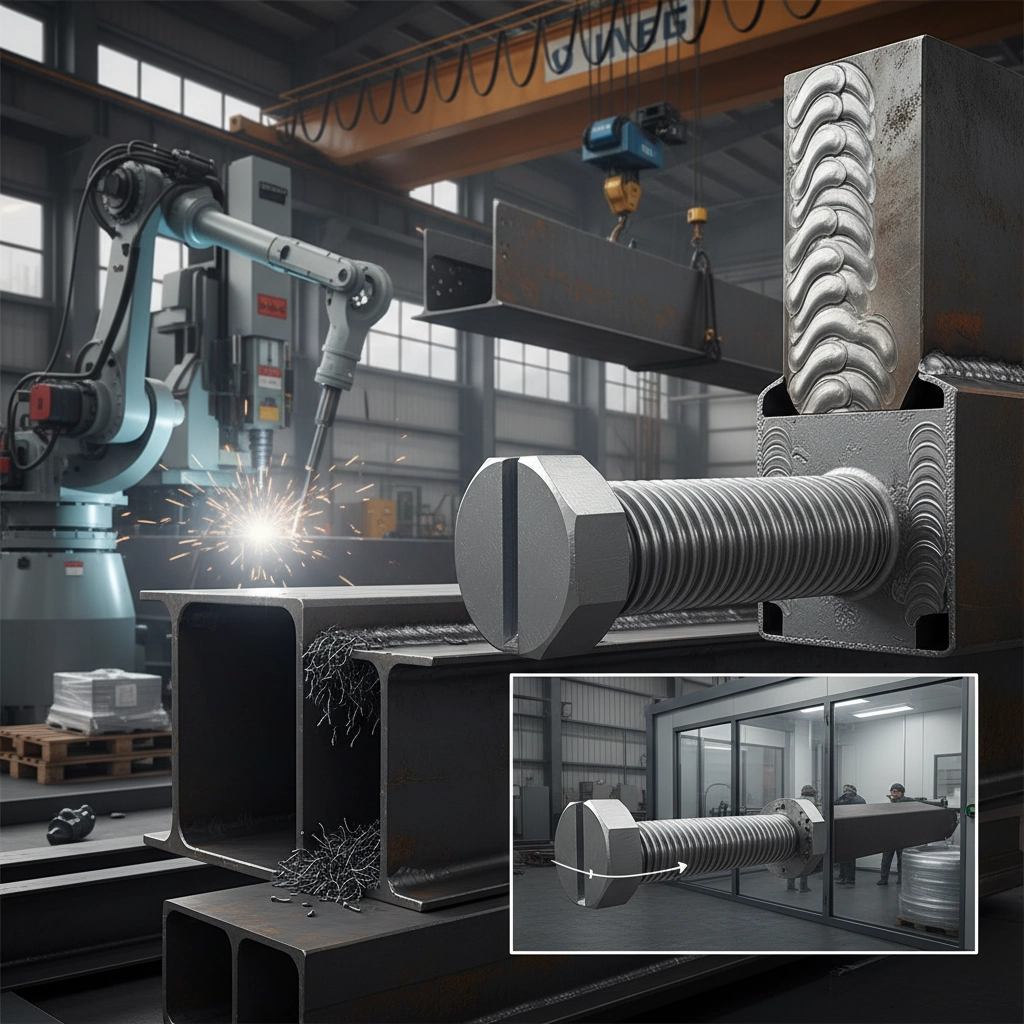
In high-load structural engineering, the selection of fastening components is rarely just about size; it is about the intersection of material science and surface treatment. The demand for china black bolts and coupling nuts has surged as global construction projects seek a balance between tensile strength and corrosion resistance in indoor and semi-exposed environments.
The technical challenge lies in ensuring that the black oxide or phosphate finishes do not compromise the structural integrity of the graded steel. For procurement managers and engineers, understanding the variance between different black surface treatments is critical to preventing premature oxidation and ensuring the longevity of threaded connections in industrial frameworks.
This analysis examines the technical specifications of high-strength fasteners, specifically focusing on the DIN 6334 standard, and provides a framework for evaluating the performance of black-finished fasteners in modern metal construction.


The primary function of a coupling nut, such as those conforming to DIN 6334, is to provide an extended grip length. Unlike standard hex nuts, the elongated body allows for deep engagement with two mating threaded rods, which effectively distributes the axial load over a larger surface area of the thread.
This design is essential for creating adjustable tie rods or extending threaded bars in concrete formwork. By utilizing full internal threading, the system ensures a uniform connection, reducing the risk of thread stripping under high tensile stress.
Precision in thread pitch (ranging from M6 to M36) is the cornerstone of fastener reliability. For DIN 6334 components, the synchronization between the nut's internal threads and the bolt's external threads must be absolute to prevent vibration-induced loosening in machinery and HVAC bracing systems.
Material selection typically involves carbon steel or stainless steel, with strength levels reaching Grade 10 or 12. High-strength graded steel is imperative for load-bearing applications where the fastener must resist deformation under extreme tension, which is often the case in seismic bracing and structural steelwork.
The transition from a standard M12 pitch of 1.75mm to larger M36 diameters requires strict quality control during the cold-forging and threading process. Any deviation in the dP (pitch diameter) can lead to uneven load distribution, compromising the safety of the entire assembly.
Surface finishes are not merely aesthetic; they are functional barriers. In the context of china black bolts, the 'Black' finish usually refers to black oxide or phosphating, which provides a baseline level of corrosion resistance and reduces glare in specific industrial environments.
For engineers, the choice between ZP (Zinc Plated), HDG, and Black depends entirely on the exposure level. While HDG is superior for outdoor marine environments, Black remains the standard for precision-engineered components where tight tolerances are prioritized over extreme environmental protection.
The efficiency of a coupling nut is measured by its ability to maintain joint integrity under variable loads. The elongated hexagonal body of a DIN 6334 nut increases the shear area of the threads, which significantly elevates the maximum allowable load compared to standard short coupling nuts.
Evaluating the performance of these fasteners requires a look at the relationship between material grade and the chosen finish. High-carbon steel provides the necessary tensile strength, while the surface finish manages the interface friction and oxidation rates.
In construction and steelwork, these components are indispensable for extending threaded bars within concrete formwork or post-tensioning systems. The ability to adjust the overall length of a connection makes them ideal for HVAC duct support systems, where seismic bracing requires precise linear alignment and high stability.
In the automotive sector, the use of black-finished fasteners is common for repairing damaged studs on engines or creating custom-length fasteners. The precision of the DIN 6334 standard ensures that these repairs meet original equipment manufacturer (OEM) specifications for fit and torque.
The industry is moving toward a more data-driven approach to fastener selection. Rather than choosing based on generic categories, engineers are now utilizing load calculations and material certifications to specify the exact strength level (e.g., Grade 8.8 vs Grade 12.9) required for the application.
Advancements in cold-forging technology and spheroidizing annealing equipment have allowed manufacturers to produce fasteners with higher fatigue resistance. This evolution is particularly evident in the production of china black bolts, where the consistency of the thread profile is now managed by advanced CNC machinery.
Looking forward, the integration of smart coatings that can indicate stress levels or corrosion onset is the next frontier. Until then, the focus remains on perfecting the chemistry of phosphate and zinc coatings to extend the lifecycle of structural joints in harsh environments.
Selecting the correct coupling nut requires a multi-dimensional analysis of the operating environment, the required tensile strength, and the available installation tools. A mismatch in thread pitch or material grade can lead to catastrophic joint failure in structural applications.
Procurement professionals should evaluate the source factory's certifications, such as ISO 9001, to ensure that the graded steel used in the production of coupling nuts meets international safety standards.
The following matrix provides a technical baseline for selecting the appropriate configuration based on common industrial requirements.
| Configuration Type | Material Grade | Surface Finish | Recommended Use Case |
|---|---|---|---|
| Basic Profile | Carbon Steel 4.8 | Black Oxide | Lightweight Interior Frames |
| Standard Duty | Carbon Steel 8.8 | Zinc Plated | General HVAC Bracing |
| High-Duty Profile | Carbon Steel 10.9 | HDG | Outdoor Structural Steel |
| Precision Profile | Grade 12.9 | Black Oxide | High-Torque Machinery |
| Corrosion-Resistant | Stainless A2-70 | Natural/Clear | Food & Chemical Plants |
| Industrial Baseline | Carbon Steel 8.8 | Dacromet | Automotive Chassis Assembly |
The primary advantage is the extended grip length. DIN 6334 coupling nuts provide a significantly deeper engagement with mating threads, which distributes the axial load across more thread turns. This prevents thread stripping and increases the overall stability and tensile strength of the joint, making it ideal for linearly extending threaded rods in structural frameworks.
Black oxide or phosphate finishes provide minimal corrosion protection compared to Hot-Dipped Galvanized (HDG) or Zinc Plating. In outdoor settings with high humidity or salt exposure, black-finished fasteners will oxidize much faster. For these environments, HDG or Dacromet is recommended. Black is best suited for indoor, oil-rich, or climate-controlled industrial environments.
For structural load-bearing applications, strength levels 8.8, 10.9, or 12.9 are typically required. Grade 8.8 is common for general structural use, while 10.9 and 12.9 are reserved for high-tension environments where maximum yield strength is critical. Always verify the required load calculations against the material certification of the fastener.
Yes, provided the material of the nut matches the material of the rods to avoid galvanic corrosion. If you are using stainless steel rods, you must use stainless steel coupling nuts (e.g., A2-70 or A4-80). Mixing carbon steel nuts with stainless steel rods in moist environments can lead to rapid corrosion at the contact points.
Ensure that both threaded rods are cleaned of debris before installation. Thread the first rod in until firmly engaged, then screw in the second rod. Use two wrenches to tighten the assembly—one to hold the nut and one to turn the rod—to ensure the connection is secure and the desired length is achieved without twisting the rods.
Request material certifications (mill test reports) and verify that the factory holds ISO 9001, ISO 14001, and ISO 45001 certifications. Additionally, requesting free samples for independent lab testing of tensile strength and coating thickness is a standard industry practice to ensure the product meets the specific engineering requirements of your project.
The selection of china black bolts and DIN 6334 coupling nuts is a decision that balances mechanical grip, material strength, and environmental protection. The shift toward high-grade carbon steel and precision-cut threads has enabled more complex structural assemblies in HVAC and heavy machinery, provided that the surface finish is matched to the operational humidity and exposure.
For procurement and engineering teams, the practical implication is clear: prioritizing dimensional accuracy and certified material grades over low-cost generic alternatives reduces the risk of joint failure. By aligning the fastener configuration with the specific load and environment, companies can ensure the long-term reliability of their metal structures.



Hit enter to search or ESC to close
If you are interested in our products, you can choose to leave your information here, and we will be in touch with you shortly.